
“It’s ok to not be ok” – Micheal Clifford
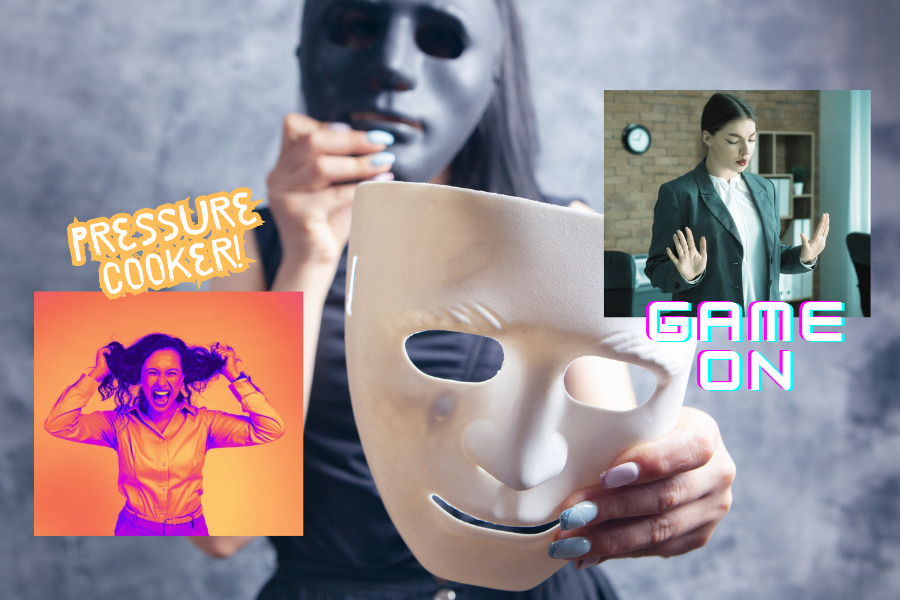
It was 8am in the morning again when I put on an invisible mask of happiness and entered school. I plastered a fake smile on my face and walked past the thousands of students who were just like me, the smile not quite reaching their eyes. I walked towards my friends and I laughed as they made jokes but the laughter did not reach my heart. Today was the day everyone was dreading, the AP exam.
It was the first time that we were taking it at school and the pressure to succeed was overwhelming. Everyone around me seemed so calm and so ready when deep down they were panicking just as much as me. The past couple weeks had been the worst with non-stop studying, work, and barely any sleep. The days would often stretch into the nights and the boundaries between the two would blur into one. Everytime I came to school, my eyes would droop like they had 200 pound weights hanging on them and the energy would be zapped out. These thoughts were jumbling through my head throughout the exam and when I looked around me for any sign of comfort, no one said anything, no one shared their panic, everyone just pretended, and so did I.
The “Everything is Perfect” Trap
There is this unspoken rule in school, especially when you are taking advanced classes, pretend like you’re succeeding effortlessly or pretend like you’re not while you’re still getting good scores. To no one’s surprise both options involve pretending. It is much like being a duck in a pond, from afar it looks like it’s gliding smoothly but truly it is trying its best to stay afloat. The truth is that pressure does not just come from the test itself but from the illusion that everyone is handling the stress perfectly when you are secretly drowning.
After the exam ended, everyone finally asked “are you ok?” and “How did you do?” and every single time, all I said was “It was fine” or “I’m fine”. The words “I’m fine” escaped my mouth so many times that day I lost count. It was as if I was trying to convince myself I was. Even when I came home, I had to force myself to keep up my facade of positivity so my parents would not worry, and honestly I did not have any energy to answer more questions. When we constantly tell the world that we are “fine”, a weight gathers in our chest and locks us in our own heads.
The Weight of Bottled Emotions
That night sleep was practically impossible and my thoughts kept looping through my head. Finally, my phone lights up and I see a call from my closest friend. I slowly pick up the phone and she asks, “Are you ok?” This time I’m not strong enough to keep pretending and I spiral, my miserable and helpless thoughts spilling like clear drops of rain. I confess how tired I am of pretending, how terrified I am of failing, and how broken I am feeling. She didn’t interrupt or tell me that it was going to be ok. She just sat and listened silently, feeling my pain, my hopelessness, and all she said was “I get it”.
Hearing those three simple words, “I get it” felt like a huge weight was being lifted off of my chest. I hadn’t realized how much stress and anxiety I had kept inside for so long and how much it hurt to be isolated. Before she said the words, I felt like I was trapped in my thoughts, stuck in a loop of self pity. But those words didn’t fix everything, they changed my perspective completely. My feelings weren’t a sign of weakness but rather a normal response to an intense situation. That call made me realize that we don’t need a lecture or a list of solutions to feel better, we just need to know that someone else feels the same way.
Since she gave me that space to breakdown, two days later, when the roles reversed, I knew exactly what to do. This time my phone rang, but she was carrying the pain, too scared to express it. Her bottled emotions crack and the pieces of glass fall on to my lap. I sat and listened just as she did, no judgement and fixing her problems and all I can say is, “I get it”. These three simple words are better than any generic advice parents could give. Although their intentions are good, by constantly telling us that “It’s just one test” or “You’ll do better next time” they try to fix it, rather than validating it. They don’t truly understand the weight of bearing this pressure that never seems to leave.
Dropping the Mask
According to a poll of around 700 individuals between the ages 16-35, 72% of the participants expressed they felt immense pressure from a young age. Academic success or any success for that matter should never come at the cost of our own mental health. The pressure to succeed is a reality but the requirement to suffer in that pressure alone is an illusion we create for ourselves. This pressure is especially heavy on South Asians as there are huge expectations for us and our future. It is sometimes difficult to communicate with our own parents because they emphasize that the stress we are feeling is normal and brush aside. We need to realize that our stress is justified, our feelings are real, and most importantly, we are not alone. We need to stop pretending that we are “fine” because the truth is we are just too proud to be vulnerable.
Let’s start changing the way we talk, switching fake smiles and laughter for honest and open conversation. The next time someone asks you how your horrible day went, challenge yourself to be open and vulnerable, stepping away from the script. Chances are the person standing in front of you is waiting for the same opportunity to tear off their own mask.
About the Author
Manasa Praveen is a rising junior at American High School. She wants to share her experiences and encounters of South Asians struggling with mental health through writing and building awareness. She is part of the 2026 RCOZ High School Changemaker program.
