
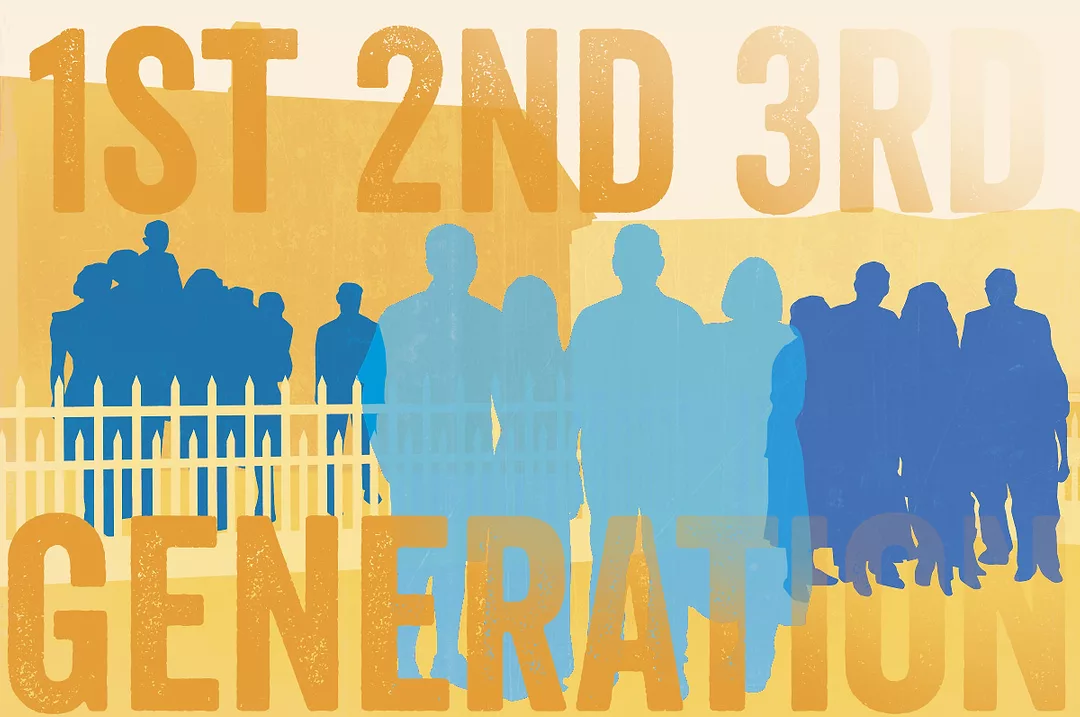
Where Am I From?
Growing up people often ask, “where are you from?” The answer was simple to me: California. I was born in California, my parents were born in California, and my memories were rooted here. But somehow, that one answer never felt complete. It left me wondering where I truly belonged.
My grandparents were born in New Delhi and came to America around 1975, and because of them, India has always existed in my life, talked about, but not a place where I grew up. It lives in the sound of Bollywood music constantly playing during gatherings, or the colorful lehengas folded carefully in my closet for Diwali celebrations or weddings. Although me and my parents have spent our whole lives in the United States, India has always felt like another home that I feel connected to through stories rather than memories.
However, being a third-generation Indian is a strange place to stand compared to most of my friends who are second-generation. My grandparents are able to carry firsthand memories of their life growing up in India. My parents grew up balancing Indian traditions with American life. But my experience was always different, making me feel almost out of place. I was never raised between two countries, just one, and another generation’s memory of it. I always tried to understand where I truly fit.
One Generation Away
Sometimes I wonder if I am “Indian enough.” I have struggled speaking Hindi fluently, as I had to teach myself and learn from my parents and grandparents due to the fact that my parents never spoke it to each other at home when I was younger. There are many traditions that I only understand when explained each year. There are jokes that my friends or grandparents make that I can’t fully understand. Yet, at the same time I am often reminded that I am not a typical American. My lunch smelled different, the holidays I celebrate are different, my parents have different expectations.
It’s funny how identity can work. One day you might feel too American, and the next you are too Indian. Living in that in-between space can make you question whether you are truly enough for either world.
Growing up, I always envied my parents’ and friends’ close relationship with Indian culture. They were raised by immigrants who naturally passed down the culture and traditions because they lived through them everyday. For me, those traditions just felt one generation further away, forcing me to reach for it, rather than it coming to me. The large distance often made me feel isolated and left me with a question if I truly belonged. I constantly compare myself to those that seem more “connected” to their culture than me, making me doubt if I am Indian enough. These overwhelming feelings affected my confidence and sense of identity.
This made me realize that in my case, culture isn’t inherited automatically, it has to be chosen.
Choosing to Learn
I willingly choose to ask my grandparents about the towns that they grew up in instead of letting all those memories and stories disappear. I choose to learn what and why we celebrate certain holidays. I choose to wear Indian clothes and embrace my culture because it is a constant reminder that I am connected to something much older than myself.
Sometimes those choices feel lonely. This feeling doesn’t come from being alone, but from wondering whether anyone else understands what it feels like to be connected to a culture that may be out of reach. These thoughts can affect one’s sense of belonging and confidence.
Third generation Indian Americans don’t always have a visible and clear script. There are fewer stories about those of us who grew up trying to hold on to traditions that become quieter every generation.
This isn’t just how it feels, it is represented in numbers too. According to the 2024 Indian American Attitudes Survey conducted by the Carnegie Endowment for International Peace , 30% of Indian Americans are second-generation, while only 5% are third-generation. Knowing this makes me feel out of place and why it may feel difficult to search for stories that reflect my own experience. Many conversations often center on children of immigrants, while those like me with another generation removed are still figuring out ways to stay strongly connected to our roots.
My Own Version of Being “Indian”
Over time, I learned that every generation adapts while carrying pieces of the previous one forward. My grandparents’ experience is different from my parents. While my parents’ experience is different from mine.
For me, being Indian may not always look traditional. It looks like introducing my non-Indian friends to foods they can’t pronounce, but end up loving it. It looks like explaining why we have a strict rule of taking off shoes before entering the house. It looks like spending hours learning dances for different celebrations. It looks like laughing when my grandparents mix English and Hindi in the same exact sentence.
Although it may seem like I have many similarities to second-generation Indians, there is one difference. People often assume that I am not in touch with my culture due to my parents not growing up in India. While I am still learning about myself and my roots, I constantly feel like I have to live up to certain expectations to prove them wrong. Constantly feeling the need to validate your identity can become emotionally draining and exhausting.
Carrying Life Forward
One of my favorite concepts is that identity isn’t something you automatically find in yourself, it’s something you must build over time. Every festival I celebrate, every conversation I have with my grandparents, and every question I ask becomes another stepping stone or brick in that identity. I don’t have to have the same experiences as others to learn and appreciate where my family came from.
In many ways, that is exactly what being third-generation truly is. We inherit many memories that we have been told and were not made by ourselves, but it is our choice on what we do with them. In future generations, some customs may fade, while others may evolve. That is reality.
My biggest hope is that future generations will be able to learn where they came from, just like how I did. Stories that have been brought to me by previous generations are now mine to carry on.
Me and my parents were not born in India, but being Indian is still a huge part of me, not because of where we live, but from where my family began. Being third-generation isn’t about being perfect at preserving every single tradition. It’s about making sure that what connects our roots to us never fully breaks, even as something new is incorporated into each new generation. And for me, that has become an important aspect of my mental well-being.
About the Author
Amiya Seth is a high school student and a member of the 2026 HSCM program who is highly passionate in promoting mental health awareness.
